Archive for the ‘VO Audio Technology’ Category

Posted under VO Audio Technology by Nikki on Sunday, February 17, 2008

I’ve been researching methods for providing real-time voice over streams to clients who want to record at their end. Not only are there a bunch of choices with respect to ISDN equipment, but there may be a benefit to bypassing what may be outdated technology and going straight to audio-over-IP options like Telos System’s new Zephyr Z/IP or AudioTX. Going over IP is more future-friendly and would allow me to avoid the monthly expense of maintaining an ISDN line with a third ISP (I already have cable internet with Comcast and a DSL backup through AT&T).


Well, more on my new research project will follow in upcoming blogs if I pursue this, but in the process I found this nice video blog of Joe Cipriano’s ISDN session for West Wing promos. It’s great to see a pro at work — and how nice of Joe to show us his equipment. :)


Posted under VO Audio Technology by Nikki on Friday, September 21, 2007

There are a lot of microphones out on the market suitable for all types of recordings, and a whole lot more that are unsuitable. Before evaluating a microphone for voice over, it helps to understand what the microphone is supposed to do and all the things that can affect (enhance or weaken) performance. Rick Waller, Tim Vear and John Boudreau, three engineers with Shure Incorporated, have put together what I think is a pretty comprehensive 39 page guide on these issues: Mic Techniques for Live Sound Reinforcement.


The title really doesn’t tell the whole story. In addition to mic technique, the ebook discusses microphone characteristics, mic placement, acoustics, sound waves, and the four characteristics that affect sound propagation: reflection, absorption, diffraction and refraction. It also provides a useful glossary of terms.


Since this free publication is provided by Shure, only Shure microphones are featured in the Selection Guide on page 34. Well, it’s their book and Shure has sure earned bragging rights, though they don’t make a big fuss about it in this ebook. Still, it’s interesting to see how many different microphones just one company makes for all the different instruments listed, including the human voice. If you jump to the Voice-Over section of the guide, you’ll see the SM7b listed . . . that’s my microphone.


Posted under VO Audio Technology by Nikki on Wednesday, August 22, 2007

I get a few emails in response to my blogs and asking for more information on voice over work and tools. Recently, I received this email from Robert in Rhode Island,which I include here with his permission:


Dear Nikki,
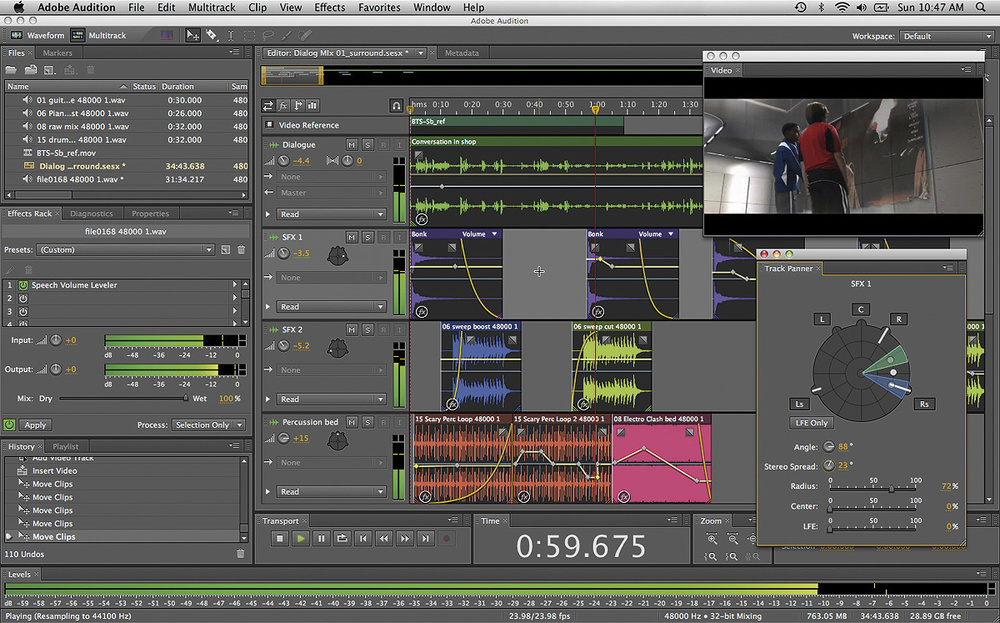
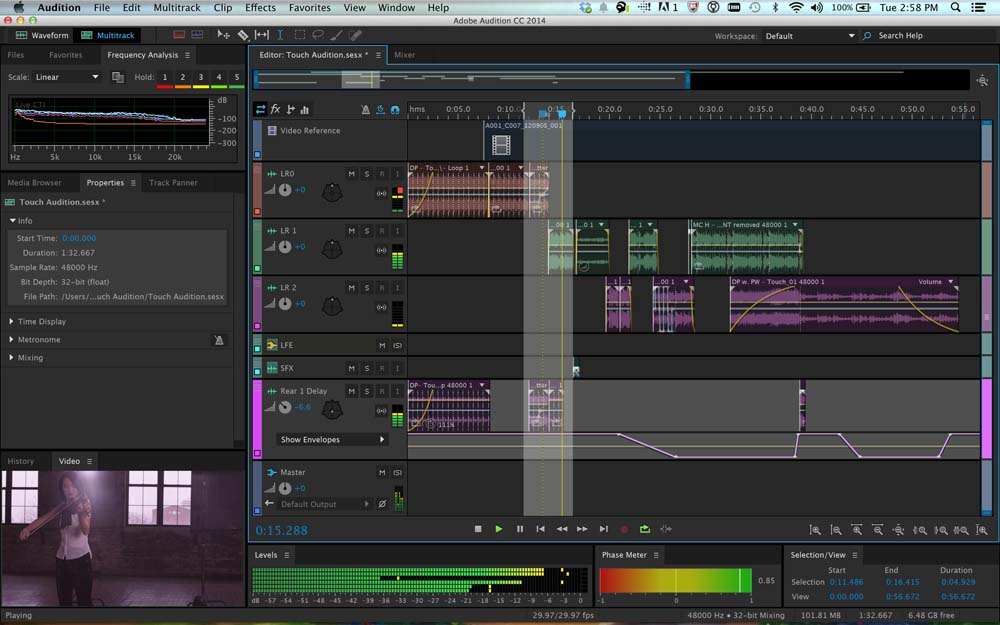
I’m trying to get started in the voiceover biz. I love your helpful approach,I’ve learned a lot from reading about your DAW.


I recently bought a Samson C01U microphone,which plugs directly into the computer. It came with a CD from Cakewalk,a ‘SONAR LE’ DAW.


The thing is, I’m not particularly computer-savvy;I do ok for an old dude (I’m 58),but this thing seems geared to people who already know how to operate a recording studio…


so,my question is: is the Adobe Audition you recommend that user-unfriendly too,for a novice? Do I need to just suck it up and spend six months figuring this thing out?


Thanks Nikki,


Here’s my reply:


Hi Robert. You can only help yourself by getting as familiar as you can with your gear and software. There’s no downside there and there are tons of online resources which will help you speed up the learning curve. I definitely recommend video/audio tutorials to learn software. There’s a great site run by Apex Web Media which I recommend to many people wanting to learn different computer programs: The link will take you to the Cakewalk tutorial page, but they have a lot of training titles.You might see other training that would benefit you if you’re not super computer savvy. Apex also has a more affordable $30 a month online training course; but if you click on the titles, you’ll see that all their intro Chapters are free demos, and you can learn a lot just from running those.


Two other great resources are the VoiceOverSavvy.Com forum and also Emusician.Com, which posts some of the most helpful articles in the VO and music industry. I subscribe to the magazine, but you get great stuff (and no recycling) right from the web site. Check out their section on audio editing software.


My love of Audition has more to do with my comfort level; it’s what I’m familiar with — and I mean years of use (from when it was Cool Edit). Sonar will do the job and it’s software you already have but my experience with it is very limited. I know there are many voice producers who use it.


Good luck,
Nikki


I want to add that, despite my experience with Adobe Audition 1.5, last year I purchased the Total Training tutorial DVD for Audition 1.5 and learned so much more, including the fact that Audition has a vocoder feature in its multitrack section, very cool. There are obviously good and bad video tutorials out there, but I’m not convinced you can learn any software or computer program as effectively simply from reading a book; it helps to see the interface and applications during instruction.